


Local Details First
Check Forsyth County records, sewer availability and the actual site.
Winston Salem Septic is the number one septic company in Winston Salem, NC. We provide septic tank pumping, cleaning, real estate inspections, repairs, installations, and replacements for residential and commercial properties. We also handle drain field inspections, repairs, and replacements.
Our team has over 17 years of experience with repairs, project management, and business oversight. We help you understand the options before choosing the work. Forsyth County soil, slope, wet ground and permit records shape the plan. Expected service life depends on the installed product, site conditions and maintenance.
Check Forsyth County records, sewer availability and the actual site.
Distinguish a blockage, tank defect and field problem.
Compare what is included before selecting the work.
Understand the options without sorting through jargon.
Consider access, bedroom changes and usable treatment space.
Keep records and build a maintenance plan around the system.
Start with the service that matches your need. If you are unsure, describe the symptoms.
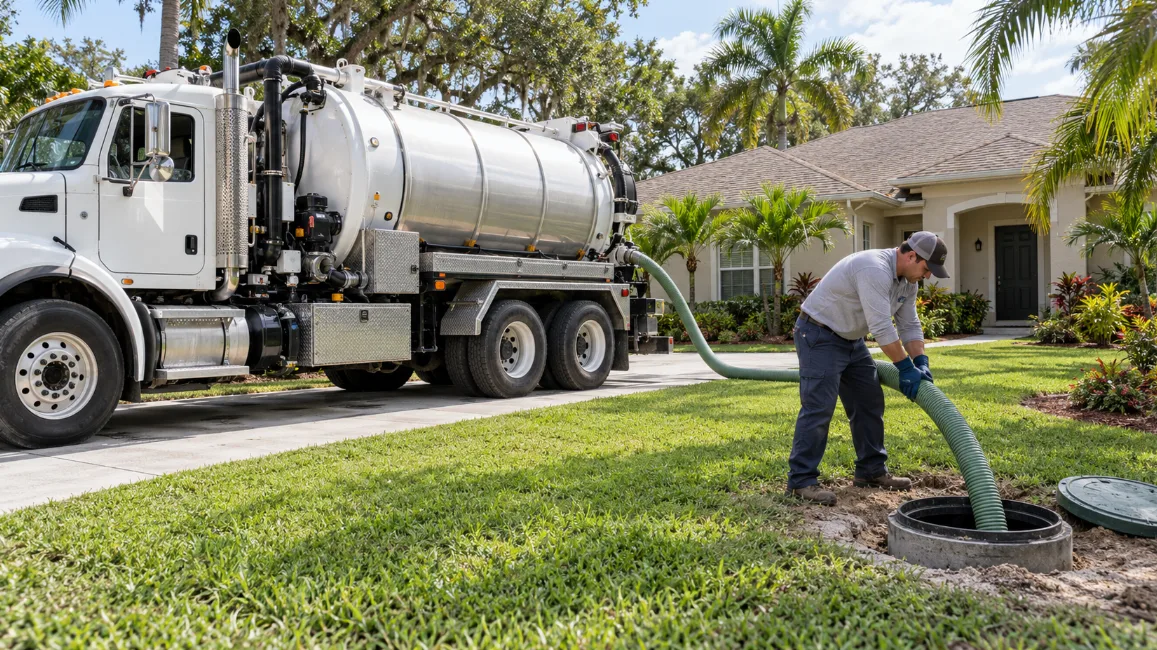
Routine care, a recurring backup or a new system: each starts with a clear scope and the property’s actual needs.
Remove accumulated sludge and floating waste before solids reach the field. Confirm the tank size, lid access and disposal scope. A backup that returns after pumping needs a diagnosis.
Explore Septic ServiceRemove stubborn deposits with a method suited to the tank. Confirm whether the proposal includes pumping, wash-down, access and disposal.
Explore Septic ServiceUnderstand the tank condition, accessible equipment and warning signs before choosing repairs or closing on a property. Define the written inspection scope first.
Explore Septic ServiceFind out whether the issue is a lid, fitting, filter, seal, pump or damaged tank. Targeted component work and structural replacement need different plans.
Explore Septic ServicePlan tank installation and replacement around bedrooms, suitable soil, sewer availability and the approved layout. Price the complete system and its ongoing care.
Explore Septic ServiceRequest help for a sewage backup or high tank level. Describe the symptoms and ground conditions. Availability is confirmed separately; the form is not dispatch.
Explore Septic Service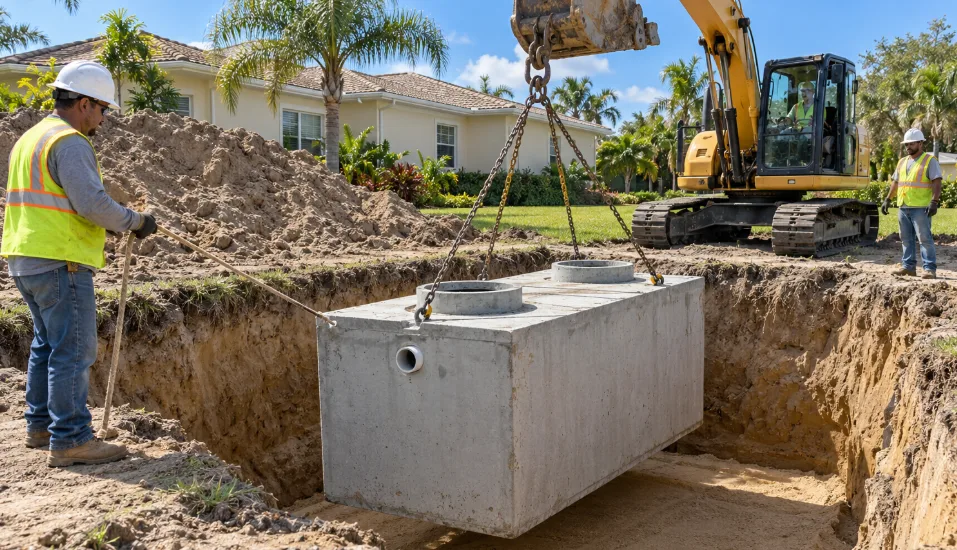
A tank can be sound while the field struggles. Review distribution, soil and groundwater before deciding on repair or replacement.
Separate damaged lines and uneven distribution from soil that cannot accept wastewater. A targeted repair needs a confirmed cause and an approved scope.
Explore Drain Field ServiceInvestigate persistent wet spots, odors and backups after pumping. Review the field layout, distribution equipment and site changes before choosing work.
Explore Drain Field ServicePlan a replacement field where the existing area cannot perform reliably. Review the tank, soil, reserve area and approved flow before excavation.
Explore Drain Field ServiceStart with the floor plan, system record, sewer availability and site conditions before choosing a tank or replacement field.

A roughly 1,900-sq-ft home is a useful planning example. NC sizing uses bedrooms and design flow, not floor area alone. The permit record identifies your installed tank; a measured Winston-Salem average tank size was not established.
Start with sewer availability, a signed soil/site application and a complete site plan. Forsyth County evaluates the lot, issues the required approvals and inspects installation. Evaluation, design, construction and final approval have separate schedules.
What looks like a tank failure can start in the drain field, the plumbing or the way the property uses water.
Overdue pumping lets sludge and floating waste build up. Escaped solids can clog the field.
Running toilets, leaks and back-to-back laundry loads can overwhelm the system’s capacity.
Grease and wipes obstruct flow. Harsh chemicals can disrupt treatment and harm the system.
Saturated ground leaves too little space for wastewater to drain and receive soil treatment.
Roots can enter openings. Vehicles crush components or compact soil. Broken fittings also disrupt flow.
Deteriorated or undersized systems struggle. On advanced systems, missed pump and aerator care can interrupt treatment.
A septic system is more than a tank. Its storage capacity, treatment process and drain field each do a different job. Use this guide to understand home size, tank materials, expected lifespan and Winston-Salem conditions before choosing a service.
1,877 sq ft was the metro median listed-home size in September 2026. That is a useful market benchmark, not the average of every city home or septic-served house.
The city's historical housing study reported an average of 2,581 sq ft and a median of 2,345 sq ft in a non-scientific sample of newly built single-family homes. It is older, limited evidence—not a current average of all homes or septic properties.
A three-bedroom home around 1,900 sq ft is an illustration. Its bedrooms, approved use and system records matter more for septic planning than its floor area or bathroom count.
No verified citywide installed-tank average was found. Use the minimum examples below for planning; use the permit and tank markings to identify an existing system.
| Bedrooms | Design flow | Minimum tank storage |
|---|---|---|
| 2 | 240 gallons/day | 1,000 gallons |
| 3 | 360 gallons/day | 1,000 gallons |
| 4 | 480 gallons/day | 1,000 gallons |
| 5 | 600 gallons/day | 1,250 gallons |
NC residential design flow starts at 120 gallons/day per bedroom; occupancy above two people per bedroom can raise it. Minimum storage and daily flow are separate. More than five bedrooms, multiple dwellings and special equipment follow additional rules.
Current NC DHHS 18E rules, including June 2026 amendments. A larger tank alone does not determine field size or approval.
Keep soil/site evaluation, design, permit review and construction as separate schedule items. The 4–6-business-day allowance is initial planning only, not an official county turnaround. Check the live county wait-time dashboard or Environmental Health at 336-703-3225 for the current queue and fees.
Qualified engineer or authorized-evaluator options have their own requirements. A private condition report does not replace government authorization. See county new construction and NC permit law.
Preventive pumping does not require a county health permit.
Use the county repair application for sewage surfacing, backups or other failure signs. Approval defines the work; the owner hires the contractor.
Applicable projects need a Health Department Release before the building permit. Added bedrooms may require another site evaluation.
Pumping FAQs · Repair process · Property additions. Confirm current fees rather than relying on an older application.
Heavy and rigid. Plan lifting access; inspect covers, walls and seams.
Lighter shell. Correct support, backfill and sound fittings matter.
Lightweight molded plastic. Follow burial, backfill and groundwater requirements.
Use an approved model and installation method. No material gives every property the same service life. Inspect condition, follow the manufacturer's requirements and keep tank, field and equipment life separate.
A conventional system uses the tank and suitable soil for treatment. Other sites need pumps, different distribution or advanced treatment. The soil evaluation and approved design decide; tank material does not.
Ask about inspection, service-contract and equipment costs before comparing proposals. NC State explains the site and treatment options.
Soil depth, texture, restrictive layers, wetness and slope vary by parcel. Do not assume a neighbor's approval applies to your lot. Protect the future repair area from building, paving and vehicle traffic.
Reynolds Airport's 1991–2020 normal rainfall is 43.20 inches a year. The practical concern is how your site drains: saturated soil can restrict field performance. Emptying a tank in high groundwater can also cause damage.
The Utilities Records Center helps confirm service availability and connection information. Some streets contain both septic and sewer properties.
Practical answers for Winston-Salem homes and businesses.
The metro listing median was 1,931 sq ft in August 2026, according to Realtor.com data on FRED. It is not a citywide average or septic-home measurement.
No measured Winston-Salem installed-tank average was established. For one dwelling, NC minimums are 1,000 gallons through four bedrooms and 1,250 gallons for five. Verify the actual tank record.
Not by itself. North Carolina uses bedroom-based design flow and applicable system rules. More bathrooms alone do not establish a larger required tank.
Forsyth County says preventive tank pumping does not need a health department permit. Installation and regulated repair use separate approval routes.
Check sewer availability, arrange the soil/site evaluation and obtain the required Improvement Permit and Construction Authorization through the standard county route.
Use 4–6 business days only as an initial complete-application planning allowance, not a county guarantee. Check the county wait-time dashboard; soil evaluation, design, corrections and inspection add time.
Forsyth County requires a Health Department Release for applicable additions on septic properties before a building permit. Bedroom additions may also need a soil/site evaluation.
Many conventional households need pumping every three to five years. Measured solids, use, capacity and the equipment maintenance plan determine the actual schedule.
No. Availability, appointment time and scope are confirmed separately. This form is not an emergency dispatch channel.
Tell us where you are, what is happening and the service you need.